
When “Yoga” Became a Word for Everything
There is a woman in a bright studio, mat rolled out, filming herself doing “face yoga” for her followers. The lighting is perfect. The caption reads: Lift and tone your jaw in 10 minutes a day. The post gets 400,000 views.
There is another one teaching water yoga for “fun filled mornings” and chair yoga “for the working professionals to do while at work!”
In another part of the world, a man who hasn’t slept properly in three years opens his wellness app. He finds hot yoga, aerial yoga, yoga sculpt, and a 7-minute “chair yoga” routine promising to ease his back at his desk. He tries them all, steadily, sincerely. He still feels hollow inside.
This is not a criticism of either of them. This is a question worth sitting with: When did yoga stop being about life force and start being about the body’s surface alone?
The Rebrand Nobody Voted For
Yoga is perhaps the most misunderstood word in modern wellness. It has been borrowed, stretched, and monetized until it functions more as a prefix than a philosophy. Power yoga. Hot yoga. Yoga sculpt. Acro yoga. SUP yoga — practiced on a paddleboard on open water. Each has its merits as movement. But the word “yoga” now travels so far from its original meaning that most people who practice it daily have never encountered what yoga actually claims to do.
The algorithm loves novelty. Advertisers love searchable terms. And so the word quietly drifted from its roots — the way a boat does when no one is watching the anchor.
What Yoga Actually Is (And It Is Not a Workout)
Let’s go back to the original understanding — not the ancient-text-quoting kind of back, but the practical, lived kind.
Yoga is a science of cultivating Prana.
Prana is not oxygen. It is not cardio. It is not the burn in your thighs from a Warrior III hold. The yogic tradition describes Prana as the intelligent life force carried by the breath — the animating energy that moves through every cell, every organ, every thought, every heartbeat.
Think of it this way. You can have a fridge full of healthy food and still feel empty. You can have a gym membership, a standing desk, and a sleep tracker, and still drag yourself through the day.
That is not a nutrition problem. That is a Prana problem.
And no amount of jaw-tapping or paddleboard balancing fixes a Prana problem.
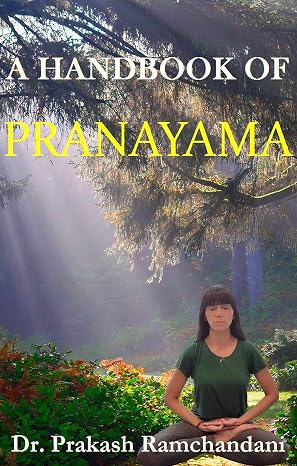
The Episode That Makes You Stop and Think
Consider Ravi, a 44-year-old executive who spent two years doing power yoga five mornings a week. He had the physique. He had the flexibility. By every visible measure, he was “doing yoga.” But by evening he was depleted — short with his children, unable to sit without reaching for his phone, restless even on weekends.
What his practice was giving him was a good workout. What it was not giving him was any deliberate attention to breath, to the nervous system, to the subtle shift from stress-response into something quieter. He was moving through postures efficiently and going home just as wired as he arrived.
That is not a failure of effort. It is a failure of framing — his, and that of the industries that taught him.
Why the Word Matters
Language shapes behavior. When yoga becomes synonymous with exercise, people approach it with an exercise mindset — more reps, more intensity, more visible results. The subtle work — the pranayama, the stillness, the actual regulation of the nervous system — gets edited out because it doesn’t make for compelling content.
And the consequences are quietly serious.
Modern neuroscience is only now catching up to what yogis observed thousands of years ago: conscious breath directly influences the nervous system, heart rate variability, inflammation, stress hormones, and cognitive function. Every shallow, hurried breath reinforces the body’s survival state. Every slow, intentional breath trains the body toward regulation, repair, and genuine vitality.
This is the science yoga was always built on. Not flexibility. Not a toned core. The breath. The life force moving through you.
What Depletes Prana (The Part Nobody Posts About)
Here is something that does not get a highlight reel: Prana can be depleted just as surely as a phone battery, and most of us are running on 11% without knowing it.
Chronic stress consumes it. Unresolved resentment consumes it. Poor, fragmented sleep consumes it. The relentless scroll of stimulation consumes it. Living at a permanent distance from yourself — always performing, always producing, never just being — consumes it profoundly.
Low Prana does not just make you tired. It affects immunity, digestion, hormones, emotional resilience, mental clarity, and the capacity to heal. It affects your ability to feel joy — not as a mood, but as a baseline state of aliveness.
The irony is this: millions of people are doing more yoga than any previous generation, and they are exhausted. Because what they are doing, largely, is exercise — which, while beneficial, does not replenish the life force. It can actually deplete it further if done without breath awareness.
The Yogi Who Never Posted
There is a 71-year-old woman in Pune who has practiced yoga for over four decades. She has never done a headstand for a camera. She cannot do a split. Her practice, every morning, is about forty minutes of pranayama — conscious breath work — followed by sitting quietly.
She has no aches. Her eyes are bright. She sleeps without pills. She laughs easily and cries when something is genuinely moving. Her doctors have stopped being surprised.
She has never searched for “face yoga.”
She has never needed to. Her face shines and she looks 30 years younger!
Can Both Coexist? (Yes, But With Honesty)
This is not a call to abandon physical movement, or to dismiss aerial yoga, or to declare that yoga must be practiced only in a particular way or not at all. Stretching is good. Movement is good. Hot yoga makes you sweat and that is not nothing.
But call it what it is.
When we call everything yoga, we dilute the container that holds the actual science. We leave people with stronger hamstrings and depleted nervous systems, wondering why they feel so tired despite “doing everything right.”
The content creators are not villains here. They are working within an attention economy that rewards novelty and punishes nuance. The tragedy is not malicious — it is structural. And the solution is not outrage. It is awareness.
Know what you are doing and why. Move your body because movement is good. But if you are seeking something deeper — if you are chasing that feeling of aliveness you vaguely remember or have read about — go toward the breath. Not just breathing, but the intelligence inside the breath. The Prana.
That is where yoga lives. It has always lived there.
The Question Worth Asking Today
Not: How many yoga styles have I tried?
Not: Does my form look good on camera?
But this: How much life force is moving through you right now?
Because a body filled with genuine Prana — the real kind, not the branded kind — has something no supplement can bottle and no filter can simulate. It radiates. It heals. It ages in a way that looks, somehow, like it is still growing.
That is what yoga was always pointing toward.
To learn more or to have online sessions on the right techniques to practice Pranayama write to Reiki Master Dr Prakash