What Science and
Think about the last time you visited a hospital.
In some hospitals, doctors and staff move around mechanically, focusing only on reports, tests, and procedures. Patients often feel like just another case file. But in other places, a good doctor sits down, listens patiently, speaks with empathy, and reassures you that things will be alright.
Almost immediately, you feel calmer. Your breathing slows, the fear reduces, and hope begins to replace anxiety. The treatment may not even have started yet, but the soothing words, compassionate presence, and genuine intention of the doctor already improve your sense of well-being.
This simple example shows something powerful: human intention, calm presence, and reassuring communication can influence how we feel physically and emotionally.
Reiki practitioners work with a similar principle. Through gentle touch, focused attention, and a calm presence, they help the body relax and move toward a state where healing becomes easier.
But an important question naturally arises.
Does Reiki actually work?
Quick Answer: Does Reiki Actually Work?
Reiki may help many people feel relaxed and emotionally balanced. Some clinical studies suggest Reiki sessions can reduce anxiety, stress, and pain in certain patients. However, scientists still consider Reiki a complementary therapy and recommend using it alongside conventional medical care rather than replacing it.
What Is Reiki and How Does Reiki Work?
Reiki as a concept is often described as being as old as mankind itself, based on the idea that a natural life energy flows through all living beings.
However, the modern practice of Reiki as it is known today was organized and brought into focus in the early 20th century by Mikao Usui, a Japanese spiritual teacher. He developed a systematic method for channeling and teaching this healing approach, which later spread from Japan to many parts of the world.
The word “Reiki” is commonly translated as “universal life energy.”
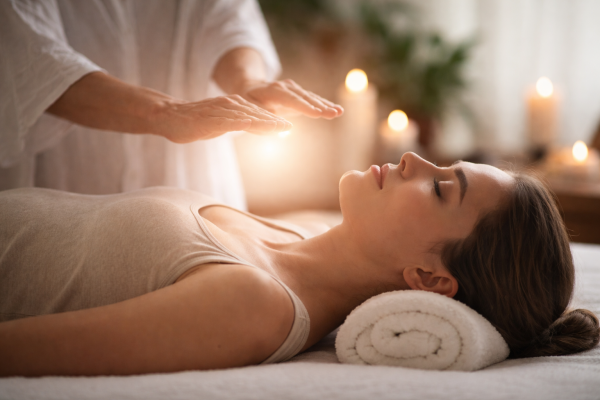
During a Reiki session, a practitioner gently places their hands on or slightly above the body. The aim is not to manipulate muscles or perform physical therapy but to create an environment of deep relaxation and energetic balance.
Many people report sensations such as warmth, calmness, or emotional relief during a session.
Does Reiki Actually Work According to Scientific Research?
Scientific research on Reiki is still evolving, but several credible studies suggest that it may support relaxation and emotional well-being.
A randomized controlled trial published in the Journal of Integrative and Complementary Medicine in 2025 studied intensive-care patients and found that a 30-minute Reiki session significantly reduced pain and anxiety levels compared with a control group.
Another randomized clinical trial involving abdominal surgery patients showed that those who received Reiki experienced lower anxiety levels, reduced fear before surgery, and decreased pain compared with patients who did not receive Reiki therapy.
A meta-analysis published in BMC Palliative Care, which analyzed data from more than 800 participants across several studies, concluded that Reiki therapy produced a statistically significant reduction in anxiety among patients and healthy participants.
At the same time, researchers acknowledge that some studies have small sample sizes and varying methodologies, meaning that larger and more rigorous research is still needed.
In simple terms, the existing scientific evidence suggests Reiki may help reduce stress, anxiety, and discomfort, but scientists continue to explore how exactly it works.
Why Many People Feel Better After Reiki
Even though scientific debate continues, millions of people around the world report positive experiences with Reiki.
One explanation is the relaxation response. When the body enters a deep state of relaxation, stress hormones decrease, heart rate slows, and the nervous system moves into a state that supports healing.
Another important factor is the mind-body connection. When a person feels calm, supported, and emotionally safe, the body often responds positively.
This is one reason why Reiki is increasingly offered in integrative medicine programs in some hospitals and wellness centers to help patients cope with stress and anxiety.
What Reiki Can and Cannot Do
It is important to understand Reiki in a balanced and practical way.
Reiki is not a replacement for medical treatment. Responsible practitioners always encourage people to continue receiving appropriate medical care from qualified healthcare professionals.
Instead, Reiki is best viewed as a complementary practice that may support relaxation, emotional balance, and stress reduction.
Many people report benefits such as better sleep, improved mood, reduced anxiety, and a deeper sense of inner calm.
Does Reiki Actually Work for Everyone?
Like many wellness practices, Reiki does not affect everyone in exactly the same way.
Some people experience immediate relaxation during a session, while others notice gradual changes over time. Personal openness, the environment, and the practitioner’s experience can all influence the experience.
Learning Reiki from a genuine teacher also plays an important role in understanding and practicing it effectively.
High-Traffic Questions People Ask About Reiki
Is Reiki scientifically proven?
Some scientific studies indicate that Reiki may help reduce anxiety, stress, and pain. However, researchers generally say that more large-scale studies are required before definitive scientific conclusions can be made.
Is Reiki safe?
Reiki is considered a safe and non-invasive practice because it does not involve medication or physical manipulation. It is commonly used as a complementary therapy alongside medical treatment.
Can Reiki help with stress and anxiety?
Many people use Reiki specifically for relaxation and emotional balance. Several clinical studies have reported reductions in anxiety and stress levels after Reiki sessions.
Can anyone learn Reiki?
Yes. Reiki is traditionally taught through a process called attunement conducted by an experienced Reiki master who guides students in understanding the practice.
How long does it take for Reiki to work?
Some people feel relaxed during their very first session, while others may notice gradual improvements over multiple sessions depending on their individual situation.
Final Thoughts

So, does Reiki actually work?
For many people, Reiki creates a powerful sense of relaxation, emotional balance, and inner calm. Scientific research suggests it may help reduce anxiety and stress, although researchers continue studying the exact mechanisms behind it.
What remains clear is that compassionate intention, calm presence, and supportive human interaction can have a meaningful impact on well-being.
If you are interested in experiencing Reiki or learning it properly, it is important to learn from a genuine and experienced practitioner.
To learn Reiki from an authentic Reiki master at an affordable cost, you may contact Dr Prakash
Learning Reiki with proper guidance can help you understand the practice deeply and apply it meaningfully in your own life.