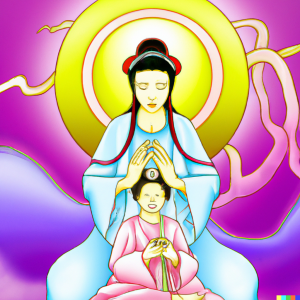
I’ve had my hands hover over hundreds of people by now. Same room. Same music. Same quiet hum of energy moving through my palms.
And yet, no two sessions have ever been the same.
People often ask me, “What does Reiki actually do?” I used to give them the textbook answer — something about energy channels, chakras, the body’s own intelligence. These days, I just tell them a story instead. Because the sessions themselves taught me The Truth about Reiki Healing – something no textbook did: healing isn’t something I hand someone. It’s something they either open the door to, or they don’t.
Let me show you what I mean.
The Woman Who Cried Before I Even Touched Her
She walked in tightly wound — shoulders up near her ears, arms crossed, the kind of posture that says I don’t really believe in this, but I’m desperate enough to try.
I hadn’t even started. My hands were just resting near her head, barely an inch above her skin.
And she started crying.
Not sobbing. Just quiet tears sliding sideways into her hair, her breath catching every few seconds.
“I don’t know why I’m crying,” she whispered. “You haven’t even done anything yet.”
But she was wrong. Something in her had already decided, the second she lay down on that table, to stop holding everything together for an hour. That decision — hers, not mine — was the real medicine. That was – The Truth about Reiki Healing. My hands were just the invitation.
She came back six more times. Each session, the tension left her jaw a little more permanently. I didn’t fix her. She let something in her finally exhale.
The Man Who Fell Asleep and Nothing Happened — Until It Did
Then there was a man in his fifties, sent by his wife, sitting on my table like he’d rather be anywhere else.
He fell asleep within four minutes. Snored, even. I finished the session, gently woke him, and he sat up looking almost annoyed.
“I didn’t feel anything,” he said. “Waste of an hour, if I’m honest.”
I told him that was fine. Not every session has to feel like fireworks.
Three weeks later, his wife called me — not for herself, for him. “He’s sleeping through the night for the first time in two years,” she said. “He won’t admit it’s connected. But it is.”
He never came back for another session. And that’s okay too. He got what he needed, quietly, without ever having to admit he believed in any of it. That too is – The Truth about Reiki Healing – Healing doesn’t require permission from the mind to already be working in the body.
The Client Who Wanted Me to Be the Answer
This one taught me the hardest lesson.
A young woman started coming to me weekly, then twice a week. She’d call between sessions, asking what she should eat, who she should date, whether she should quit her job. She began introducing me to friends as “my healer,” in a tone that made my stomach tighten a little.
I finally said something I don’t think she expected from someone whose income depended on her continuing to book appointments.
“I’m not the one who’s healing you,” I told her. “I’m just clearing some noise so you can hear yourself again. You already know what to do about your job. You’ve told me the answer three different times in three different sessions.”
She looked almost offended. Then, slowly, relieved.
She still comes in occasionally. But now she comes in already knowing what she needs from the session, not looking to me to hand her a life. That shift — from dependency to partnership — is, to me, what – The Truth about Reiki Healing is all about . It separates real healing work from something that quietly keeps people small.
A good healer doesn’t make you need them forever. A good healer makes you need yourself again.
The Skeptic’s Sister, and the Door She Wasn’t Ready to Walk Through
A woman once brought her sister to me — practically dragged her, honestly. The sister sat through the session rigid, eyes open the whole time, clearly counting the minutes.
Afterward, nothing. No tears, no revelations, not even mild relaxation.
“She’s been like this for years,” the woman told me later, frustrated. “I’ve tried everything — therapists, retreats, even flying in a specialist. Nothing works. Why won’t she just let herself heal?”
I didn’t have a tidy answer for her, because there isn’t one.
Some people are standing right in front of an open door and still cannot walk through it. Not because they’re stubborn, not because they don’t love the people trying to help them, but because somewhere underneath, there’s fear, or exhaustion, or a kind of distrust that took years to build and won’t dissolve in sixty minutes on a massage table.
The Truth about Reiki Healing is that You cannot buy someone else’s readiness. Not with money, not with love, not with the best healer in the world.
I told her sister gently, “Maybe this isn’t the year. And that has to be okay.”
It’s one of the hardest things I say to people — family members who love someone in pain and cannot understand why all their effort isn’t enough. But someone else’s timing was never ours to control.
So What Actually Makes Reiki — Or Any Healing — Work?
After all these sessions, all these completely different outcomes from the exact same technique, here’s what I’ve come to believe:
Healing happens in the space between what’s offered and what’s welcomed.
I can offer my hands, my attention, my presence, my full training. A doctor can offer medication. A therapist can offer decades of insight. But none of us can offer the other half of the equation — the moment inside another person that quietly says, yes, I’m ready to participate in this.
That’s not something any practitioner, however gifted, can manufacture in someone else.
What I’ve Learned to Do Differently Because of This
- I stopped promising outcomes. I offer the space. What happens in it isn’t mine to control.
- I watch for dependency, and gently interrupt it. If someone starts outsourcing their decisions to me, I hand them back.
- I stopped taking it personally when a session “doesn’t work.” Sometimes the door just isn’t open yet — and that’s not a failure of the technique, or of me.
- I involve clients and remind them, often, that they are doing this too. Lying still, breathing, allowing — that’s active participation, not passive receiving.
Healing was never something I could sell someone in a sixty-minute slot, even though that’s the world we increasingly live in — one more treatment, one more supplement, one more practitioner promising to fix what hurts.
Some of it helps. I believe in the work I do, or I wouldn’t still be doing it after all these years.
But the deepest healing I’ve ever witnessed in that room — in the woman who cried before I touched her, in the man who wouldn’t admit anything had shifted, in the client who finally stopped needing me — never came from what I gave them.
That is the Truth about Reiki Healing – It came from what they, finally, let themselves receive.
If you’ve ever wondered why healing seems to “work” for some people and not others despite the exact same treatment, it usually isn’t about the practitioner or the method — it’s about readiness. And that’s something worth being gentle with, in yourself and in the people you love.
Experience a 30 minutes healing session online FREE over Zoom. Click here or Write to reikidoc@gmail.com with your request