Understanding Intermittent Hypoxia and Pranayama: The Forgotten Power of Your Breath
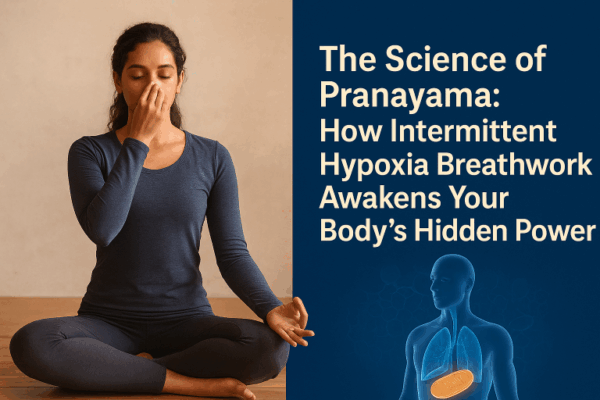
Every inhale and exhale carries more wisdom than we realise. For thousands of years, yogic masters have used Pranayama — the conscious control of breath — to awaken vitality, calm the mind, and expand awareness. Today, science is beginning to confirm what the ancients always knew: your breath is not just air; it’s a coded rhythm that trains your body to heal, adapt, and thrive.
When you gently hold your breath, especially after an exhale, your oxygen levels dip slightly while carbon dioxide rises. This brief and safe shift is known as intermittent hypoxia. Far from being harmful, this subtle oxygen “stress” signals your cells to grow stronger — awakening a cascade of adaptive responses that improve resilience, metabolism, and calm.
Co-relation between Intermittent Hypoxia and Pranayama
In scientific terms, intermittent hypoxia is a controlled reduction in oxygen levels for short periods, followed by normal breathing. This practice activates the hypoxia-inducible factor (HIF-1), which helps regulate how your body uses oxygen, builds new blood vessels, and enhances energy production in the mitochondria — your cellular powerhouses.
Athletes have used intermittent hypoxic training to boost endurance and recovery, while clinical studies suggest benefits for cardiovascular health, cognitive function, and stress resilience. The body learns to “do more with less,” improving oxygen efficiency much like tuning a high-performance engine.
Ancient Wisdom in a Modern Body
In yogic philosophy, Kumbhaka — the pause between breaths — is revered as the still point of transformation. Ancient texts describe this pause as the doorway between the physical and spiritual realms, where the body rests in stillness and energy reorganises itself.
Modern science now explains this pause through the language of adaptation and balance. In intermittent hypoxia and pranayama During breath retention, your autonomic nervous system shifts toward harmony. The sympathetic “fight or flight” quiets, and the parasympathetic “rest and repair” activates. The result is clarity, steadiness, and deep internal balance — what yogis call Samatva.
From the Himalayas to the Laboratory
Today, elite athletes, meditators, and modern breathwork practitioners all harness this same principle. Techniques such as SOMA Breath, and advanced Pranayama cycles use rhythmic breathing and gentle retention to guide the body safely into mild hypoxia — improving focus, emotional regulation, and energy.
The bridge between science and spirituality is your breath. Each cycle of inhale, hold, and exhale becomes a conversation between ancient intuition and modern physiology — a dialogue that upgrades the very intelligence of your cells.
A Gentle Morning Practice for Beginners
To reap the benefit of intermittent hypoxia and pranayama start your journey with a calm, five-minute routine each morning. Sit comfortably with your spine upright or lie down if that feels better.
Close your eyes and inhale slowly through the nose for four counts.
Exhale gently through the mouth for six counts, letting all the air leave your lungs.
At the end of the exhale, pause — hold your breath for just five to ten seconds. Feel the stillness. Then inhale again, unhurried and natural.
Repeat this cycle for five minutes, gradually extending the exhale and the pause as your comfort grows. Over days and weeks, your body will naturally learn to stay calm for longer breath-holds without any strain.
This simple practice increases oxygen efficiency, reduces anxiety, and improves mental clarity. It is the first step toward training your body to thrive under gentle, conscious stress — the essence of intermittent hypoxia and yogic Kumbhaka.
Always practice in a safe, seated or lying position, never in water, and never force the breath-hold. The power of this method lies in consistency, not intensity.
Where to Learn and Go Deeper
At Dr Prakash’s Reiki Healing Centre , regular workshops and online training programs guide participants through the deeper layers of breathwork, energy balancing, and mindful living. Many have already experienced extraordinary health, emotional, and lifestyle transformations through these sessions.
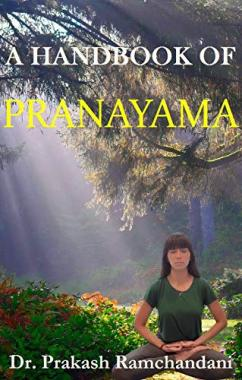
These programs blend ancient wisdom with modern breath science, offering a structured way to cultivate calm, clarity, and vitality — all through the power of your own breath. You can also learn complete Pranayama principles and practice from this book
Breath as the Original Technology
Before there were machines to measure, pills to alter, or devices to stimulate, there was the breath — the original technology of transformation. The yogis called it Prana, the life-force that sustains all creation. Science calls it oxygen regulation and cellular adaptation.
When you breathe consciously, you enter a state where biology meets spirituality. You awaken not just the lungs, but the intelligence that guides your entire system. The bridge between ancient Pranayama and modern intermittent hypoxia training shows that the power to heal, adapt, and thrive has always been within you — hidden in plain sight, between one breath and the next.